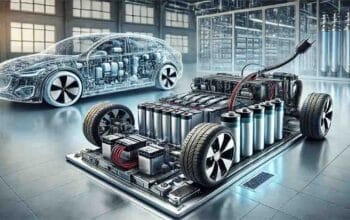
Wansagaf Indonesia (WIN) – The advent of autonomous vehicles (AVs) marks a significant turning point in the transportation landscape, promising to revolutionize how we travel. With advancements in technology, increasing investments from automotive manufacturers, and growing public interest, the future of transportation is increasingly intertwined with the development of AVs.
This article delves into the role of autonomous vehicles, examining their potential benefits, challenges, and implications for society.
Understanding Autonomous Vehicles
Autonomous vehicles, often referred to as self-driving cars, are capable of navigating and operating without human intervention. They rely on a combination of sensors, cameras, radar, and artificial intelligence (AI) to perceive their environment and make decisions.
AVs are typically categorized into five levels of automation, ranging from Level 0 (no automation) to Level 5 (full automation):
Table 1: Levels of Vehicle Automation
| Level | Description | Human Intervention |
|---|---|---|
| 0 | No Automation | Full control required |
| 1 | Driver Assistance | Driver assists but must remain engaged |
| 2 | Partial Automation | Vehicle can control steering and acceleration, but driver must monitor |
| 3 | Conditional Automation | Vehicle can handle most driving tasks, but driver must take over when requested |
| 4 | High Automation | Vehicle can operate independently in specific conditions |
| 5 | Full Automation | No human intervention required in any environment |
Source: Society of Automotive Engineers (SAE)
Benefits of Autonomous Vehicles
1. Improved Safety
One of the primary advantages of autonomous vehicles is the potential for increased safety. According to the National Highway Traffic Safety Administration (NHTSA), human error accounts for 94% of serious crashes. By reducing or eliminating the need for human drivers, AVs could significantly decrease accident rates.
Features such as advanced driver-assistance systems (ADAS) are already proving effective at preventing collisions and mitigating injuries.
2. Enhanced Mobility
Autonomous vehicles can improve mobility for various demographics, including the elderly and disabled individuals who may have difficulty driving. AVs can provide reliable transportation options, allowing these individuals to maintain independence and access essential services.
3. Reduced Traffic Congestion
By optimizing driving patterns and improving traffic flow, autonomous vehicles have the potential to alleviate congestion. AVs can communicate with each other to coordinate movement, reducing stop-and-go traffic and enhancing overall road efficiency. Studies have suggested that a fully autonomous vehicle fleet could reduce congestion by 20% to 30%.
4. Environmental Benefits
Autonomous vehicles are often designed with fuel efficiency and sustainability in mind. Many AVs are electric, reducing greenhouse gas emissions and air pollution. Furthermore, AVs can optimize routes and reduce energy consumption, leading to a lower environmental impact.
Challenges Facing Autonomous Vehicles
1. Technical Limitations
While significant advancements have been made in AV technology, challenges remain. Ensuring reliable performance in diverse weather conditions, complex urban environments, and unanticipated scenarios is critical for widespread adoption. Continuous testing and improvements in AI algorithms are necessary to enhance the robustness of autonomous systems.
2. Regulatory and Legal Issues
The deployment of autonomous vehicles raises complex regulatory and legal questions. Policymakers must develop frameworks to address liability in the event of accidents involving AVs, establish safety standards, and create guidelines for testing and deployment.
Harmonizing regulations across states and countries will be essential for the seamless integration of AVs into existing transportation systems.
3. Public Perception and Acceptance
Public acceptance of autonomous vehicles is crucial for their success. Concerns regarding safety, reliability, and job displacement in the transportation sector may hinder widespread adoption. Education and outreach efforts are essential to inform the public about the benefits of AVs and address misconceptions.
4. Infrastructure Adaptation
Existing infrastructure may require significant upgrades to accommodate autonomous vehicles. This includes implementing vehicle-to-infrastructure (V2I) communication systems, enhancing road markings, and establishing dedicated lanes for AVs. Investments in smart city technologies will be necessary to create an environment conducive to AV operation.
The Future of Transportation with Autonomous Vehicles
1. Integration with Public Transit
Autonomous vehicles can complement public transportation systems by providing first-mile and last-mile connectivity. AVs can serve as shuttle services to transport passengers to and from public transit hubs, enhancing the overall efficiency of transportation networks.
2. Urban Mobility Solutions
As cities grapple with traffic congestion and pollution, autonomous vehicles can play a pivotal role in urban mobility solutions. Shared AV fleets can reduce the number of vehicles on the road, promoting efficient use of space and reducing emissions. Integrating AVs with other forms of transportation, such as bikes and e-scooters, can further enhance urban mobility.
3. Economic Opportunities
The rise of autonomous vehicles presents new economic opportunities across various sectors. From automotive manufacturing to software development and infrastructure services, the AV industry is poised for significant growth.
Additionally, job creation in technology and support services related to AVs can help mitigate concerns about job displacement in traditional driving roles.
4. Innovation and Research
The development of autonomous vehicles encourages innovation in AI, robotics, and connectivity. Research in these areas not only benefits the AV industry but also has applications in various sectors, including healthcare, logistics, and smart city development.
Conclusion
Autonomous vehicles hold the potential to transform transportation as we know it, offering numerous benefits such as improved safety, enhanced mobility, and reduced congestion. However, addressing the challenges associated with AV technology, regulation, public perception, and infrastructure is essential for their successful integration into society.
As the industry evolves, collaboration among stakeholders, including government, industry, and the public, will be crucial to realizing the full potential of autonomous vehicles and shaping the future of transportation.