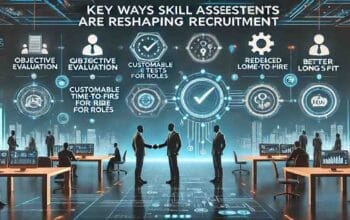
Wansagaf Indonesia (WIN) – Skill-based hiring is reshaping the job market, offering both employers and job seekers an innovative approach to recruitment. In contrast to traditional hiring methods that prioritize degrees or past job titles, skill-based hiring emphasizes an individual’s capabilities, problem-solving abilities, and adaptability.
This method has gained traction, particularly in industries like technology, healthcare, and design, where the ability to perform tasks is far more valuable than paper qualifications.
The Rise of Skill-Based Hiring: A Game Changer in Recruitment
Recent research shows that over 76% of employers are now considering candidates based on skills rather than degrees. According to LinkedIn’s Global Talent Trends report, businesses focusing on skill-based assessments have seen 24% faster hiring rates and better long-term employee retention. This shift addresses the ever-growing skills gap, ensuring that companies can find talent with the specific competencies they need.
Employers benefit from a larger pool of candidates when removing degree requirements, particularly in tech roles where self-taught programmers or developers from coding boot camps often outperform traditionally trained candidates. For job seekers, especially those from non-traditional backgrounds, this opens doors to opportunities previously out of reach.
Key Benefits of Skill-Based Hiring
1. Wider Talent Pool
By focusing on relevant skills rather than academic qualifications, companies can tap into diverse talent pools. Many individuals who have gained skills through boot camps, online courses, or on-the-job experience can now qualify for roles they may have been excluded from before. This inclusivity fosters innovation and better problem-solving.
2. Improved Job Performance
Hiring for skills directly correlates with job performance. A candidate proficient in required tasks is more likely to contribute to the organization from day one, reducing the learning curve and increasing productivity.
3. Faster Hiring Process
Skill-based hiring reduces the need for lengthy qualification verifications. Tools like assessments and real-time projects can quickly determine if a candidate is fit for the role, cutting down the hiring time by up to 30%.
4. Better Employee Retention
Employees hired based on their abilities often feel more aligned with their roles and are less likely to leave. A study by Harvard Business Review found that employees hired through skills-focused processes have a 34% higher retention rate after the first year.
5. Reduced Bias in Hiring
Skill-based hiring helps reduce unconscious bias by shifting focus from personal details (like where a candidate went to school) to objective measures of ability. This results in a more diverse workforce, which studies show leads to improved business outcomes.
| Hiring Method | Time to Hire (Days) | First Year Retention Rate |
|---|---|---|
| Degree-Based Hiring | 48 | 70% |
| Skill-Based Hiring | 33 | 84% |
(Source: LinkedIn Global Talent Trends Report 2023)
How to Implement Skill-Based Hiring in Your Organization
1. Redefine Job Descriptions
Remove traditional qualifications and focus on required skills. Specify hard and soft skills crucial to success in the role.
2. Use Skill Assessments
Platforms like HackerRank or CodeSignal allow employers to test candidates’ technical skills in real-time, ensuring they have the necessary competencies.
3. Structured Interviews
Ask candidates to solve real problems they would face on the job. Behavioral and situational interviews can also provide insight into a candidate’s practical abilities.
4. Provide Ongoing Training
Encourage skill development by offering training and certification opportunities. This ensures employees continue to grow and evolve with the company’s needs.
Why Skill-Based Hiring is Critical in a Fast-Changing Job Market
The digital transformation of industries has created new roles that demand specific skill sets rather than traditional degrees. As the world continues to evolve, particularly in tech-heavy industries, companies must remain agile in their hiring practices. According to a recent report by IBM, more than 120 million workers globally will need to reskill by 2025 due to the changing nature of work.
Companies that adapt to this hiring model will be better positioned to attract top talent, fill roles faster, and stay ahead of competitors. The future of hiring lies not in the credentials but in the capabilities, an approach that empowers individuals and benefits businesses alike.
Adapting to the New Talent Landscape
Companies that embrace skill-based hiring are better positioned to attract top talent and stay ahead of the curve. Employers who focus on skills will fill roles faster, with better-fitting candidates, reducing turnover and boosting overall productivity.
In a recent survey by Deloitte, 82% of executives reported that skill-based hiring will be key to their business strategy over the next decade. Organizations that emphasize skills over degrees will not only widen their talent pool but also create a more agile workforce capable of adapting to constant industry changes.
The future of hiring lies not in credentials but in capabilities. This hiring model empowers job seekers by leveling the playing field and benefits businesses by ensuring they recruit the talent they need to thrive in the rapidly evolving global market.